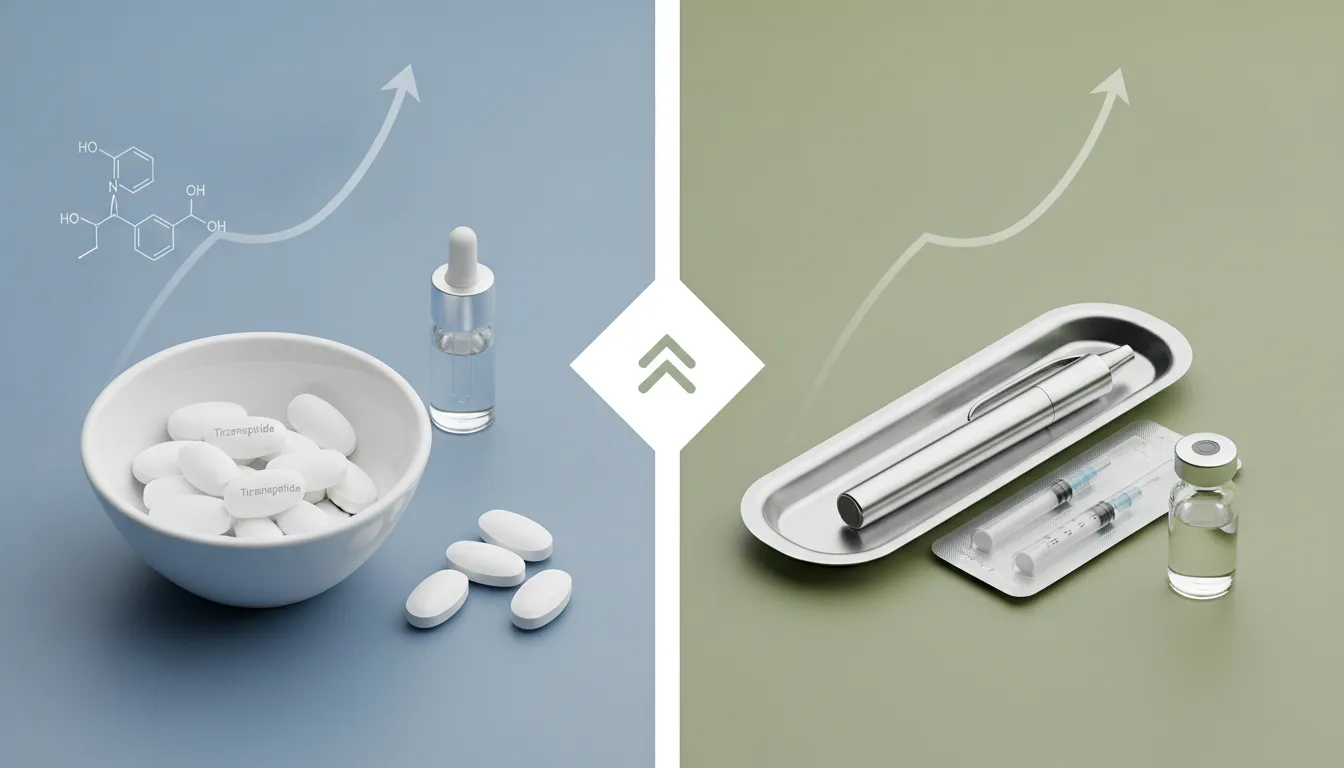
A pill may sound simpler to fit into a busy routine than a weekly injection, especially when work, family, and workouts already fill your schedule. But convenience alone can’t tell you whether a medication is safe, approved, or effective. When it comes to Tirzepatide pills vs injections for weight loss, the key fact is that FDA-approved tirzepatide for weight management is an injectable medication called Zepbound. No tirzepatide pill has FDA approval for weight loss. We’ll explain how the injection is used, what research has shown, and how to check online product claims with a qualified clinician or pharmacist.
Key Takeaways
- FDA-approved tirzepatide for weight management is an injection: Zepbound is approved for eligible adults; Mounjaro is approved to improve blood sugar control in adults with type 2 diabetes.
- Weight-loss results differ from person to person: Tirzepatide is used with nutrition and physical activity support, and ongoing check-ins help your care team assess progress and side effects.
- Talk with a qualified clinician before starting or changing treatment: Review your health history, medications, and goals, and verify product claims, especially for pills marketed as tirzepatide.
What Is Tirzepatide, and How Does It Aid Weight Loss?
Tirzepatide is a prescription medication that may be used for chronic weight management in eligible adults. It acts on hormone pathways involved in appetite and blood sugar. A clinician can help determine whether it fits your health history and goals.
How it acts on GIP and GLP-1 receptors
Tirzepatide activates two receptors: GIP and GLP-1. These receptors respond to hormones that help regulate blood sugar and appetite. Because the medication acts on both pathways, it’s known as a dual GIP and GLP-1 receptor agonist.
Researchers continue to study how these effects work together. Tirzepatide isn’t right for everyone, so a clinician should review your medical history, medications, and treatment goals before prescribing it. The FDA prescribing information for Zepbound describes tirzepatide’s actions in the body and its approved use for weight management.
How it affects appetite, food intake, digestion, and blood sugar
Tirzepatide can affect appetite and digestion in ways that may help some people eat less. It may increase feelings of fullness, reduce hunger, and slow stomach emptying. These effects can support gradual weight loss, though each person’s experience and results can differ.
The medication also affects insulin and glucagon, hormones that help regulate blood sugar. It can increase insulin release when blood sugar is elevated and reduce glucagon, which signals the liver to release glucose. These actions are relevant to blood sugar control, especially for people with type 2 diabetes. Digestive side effects can occur, particularly as the dose increases, so discuss any symptoms with your prescriber.
Why treatment also includes nutrition, activity, and ongoing care
Tirzepatide is one part of a treatment plan, not a replacement for healthy habits or medical follow-up. Your clinician may discuss eating patterns, regular physical activity, sleep, and other factors that affect your health. A plan that fits your schedule and preferences can be easier to maintain than changes that feel overly restrictive.
Clinical trials have studied tirzepatide alongside lifestyle support. In the SURMOUNT-1 trial, participants received guidance on a reduced-calorie eating plan and physical activity. Ongoing check-ins let you and your care team review progress, discuss side effects, and adjust your plan as needed.
Which Tirzepatide Forms Has the FDA Approved?
In the United States, FDA-approved tirzepatide is available as an injection, not a pill. The brand name reflects the approved use: Zepbound is approved for chronic weight management, while Mounjaro is approved to improve blood sugar control in adults with type 2 diabetes. Neither brand is an FDA-approved tirzepatide pill for weight loss.
Zepbound: injectable tirzepatide for chronic weight management
Zepbound is the brand name for tirzepatide approved for chronic weight management in adults with obesity, or adults with overweight and at least one weight-related health condition. It is used alongside a reduced-calorie eating plan and increased physical activity. The medication is injected under the skin once a week.
Zepbound requires a prescription. A clinician can review your health history, current medications, and weight-related goals to help decide whether it may be a suitable option. For details about its approved use and safety information, see the FDA’s Zepbound drug record.
Mounjaro: injectable tirzepatide for type 2 diabetes
Mounjaro contains the same active ingredient as Zepbound, tirzepatide, but it has a different FDA-approved use. It is prescribed with diet and exercise to improve blood sugar control in adults with type 2 diabetes. Like Zepbound, Mounjaro is injected under the skin once a week.
Mounjaro’s approval for type 2 diabetes does not make it an FDA-approved weight-loss medication. Weight changes may occur during treatment, but a clinician should help determine which medication fits your diagnosis and health needs. The FDA’s Mounjaro drug record provides information about its approved use and prescribing details.
Why the FDA has not approved tirzepatide pills
There is no FDA-approved tirzepatide pill for weight loss. The approved Zepbound and Mounjaro products are injections. A pill advertised online as “oral tirzepatide” is not the same as an FDA-approved product, and its claims should not be treated as proof that it works safely or effectively.
A medication must be evaluated as a specific product before the FDA can approve it. That includes evidence about safety, effectiveness, and manufacturing quality. Research into an oral formulation, if underway, would not establish that a pill sold online is equivalent to an approved injection. If you’re considering a product marketed as oral tirzepatide, ask a licensed clinician or pharmacist to review it before using it.
What to know about compounded products and online pill claims
Compounded tirzepatide is not an FDA-approved version of Zepbound or Mounjaro. Compounding pharmacies may prepare medications for specific patient needs under certain circumstances, but compounded products do not go through the same FDA review for safety, effectiveness, and quality as approved drugs. The FDA explains the limits of its oversight in its guidance on drug compounding.
Be cautious of websites claiming to sell “FDA-approved tirzepatide pills” or promising that a compounded product works just like an approved injection. Ask a clinician or pharmacist to verify what the product contains, who dispenses it, and whether it is appropriate for you. Don’t stop a prescribed medication or change your dose based on online claims.
How Do Tirzepatide Pills and Injections Differ?
At present, FDA-approved tirzepatide products are injections, not pills. There is no FDA-approved tirzepatide pill with an established dose and evidence showing it works as well as the injection. The difference is more than how you take the medication: the route can affect how it’s absorbed and how much evidence is available.
Weekly injections versus unapproved oral formulations
Zepbound, which is approved for chronic weight management, and Mounjaro, which is approved for type 2 diabetes, are injected under the skin once a week. Products advertised as oral tirzepatide are not FDA-approved tirzepatide medications, so you can’t assume their dose, safety, or effectiveness matches the injectable forms.
Tirzepatide is a peptide medication. Stomach acid and digestive enzymes can break down peptide drugs, making it challenging to deliver a reliable dose in a pill. As PlexusDx explains, results from injectable tirzepatide don’t establish that an oral formulation works equally well. Ask a licensed clinician before considering a product marketed as a tirzepatide pill.
Routine, needle concerns, and convenience
A once-weekly injection may be easier to remember than a medication you take every day. Choosing a regular day can help make it part of your routine. But if you’re uncomfortable with needles, that matters too. Tell your clinician what concerns you, and ask them to explain how to use the injection and what support is available.
Tirzepatide injections go under the skin, and your care team can show you how to administer them. The Obesity Medicine Association notes that needle concerns can be a barrier for some people. If injections don’t feel right for you, ask about other weight-management treatments with established safety and effectiveness information. Don’t switch to an unapproved pill without medical guidance.
Why evidence for other oral weight-loss drugs doesn’t prove oral tirzepatide works
Some weight-loss medications are pills, but their results don’t tell us how oral tirzepatide would perform. Different medications can work in different ways, and their ingredients and formulations affect how the body absorbs them. Evidence for one drug can’t be used to confirm the effectiveness or safety of another.
The clinical evidence for tirzepatide comes from studies of the injectable medication. An oral version would need its own testing to show that it delivers a consistent dose, works as intended, and has an acceptable safety profile. Because peptide medications can be broken down during digestion, absorption is one important question researchers would need to address. Until an oral formulation is approved and supported by clinical evidence, don’t assume it offers the same results as the weekly injection.
What Does the Evidence Say About Weight Loss?
The strongest evidence for tirzepatide and weight loss comes from trials of the injectable medication. Results offer a useful picture of what happened across groups of participants, but they can’t predict exactly how much any one person will lose. There also isn’t an FDA-approved tirzepatide pill with clinical trial results to compare against the injection.
What trials show about injectable tirzepatide
In the 72-week SURMOUNT-1 trial, adults with overweight or obesity who did not have diabetes lost an average of about 15% to 21% of their starting body weight, depending on the dose. Participants who received a placebo lost about 3%. The study included regular follow-up and guidance on nutrition and physical activity, so the results reflect treatment as part of a broader care plan.
These are group averages, not a promise of an individual result. Some participants lost more, while others lost less. Health history, treatment dose, side effects, and how long someone can continue treatment may all shape their experience.
How dose, treatment length, and individual response affect results
In clinical trials, higher maintenance doses were linked with greater average weight loss. Treatment starts at a low dose and increases gradually, however, and the right dose depends on a person’s response and tolerance. Taking more than prescribed or increasing the dose sooner is not a safe way to speed up results.
Weight loss also takes time. Major trials tracked participants over many months, and progress can vary along the way. Health conditions, other medications, appetite, digestion, and daily routines may affect results. A real-world comparison of tirzepatide and semaglutide found differences in weight change over time, but observational research cannot establish the same level of evidence as a randomized clinical trial.
Why no approved-pill evidence exists for comparison
Tirzepatide is FDA-approved as an injection, not as a pill. There are no FDA-approved oral tirzepatide doses or clinical trials showing that a pill version produces the same weight-loss results as the approved injection. That means there is no reliable, direct comparison between the two forms.
Evidence for other oral weight-loss medicines does not answer this question. Different medications can work differently and be absorbed differently, so results for an oral drug such as orforglipron cannot show how oral tirzepatide would perform. Studies comparing injectable tirzepatide with injectable semaglutide also do not establish whether a tirzepatide pill is effective. If a product is marketed as oral tirzepatide, ask a clinician or pharmacist to check its approval status and source.
What to expect from weight loss and long-term maintenance
Weight loss often happens gradually, and progress can change from month to month. A clinician can track weight, health markers, side effects, and overall well-being, then discuss whether the care plan needs adjustment. Nutrition, physical activity, sleep, and regular follow-up can support treatment, but no approach can guarantee a specific result.
Long-term care is worth discussing before treatment begins. In the SURMOUNT-4 trial, participants who switched from tirzepatide to placebo regained weight on average, while those who continued treatment lost additional weight. Individual experiences can differ, but the findings show why maintenance planning matters. Talk with your prescriber before stopping or changing treatment.
How Do You Take Tirzepatide Injections?
Tirzepatide for weight management is taken as an injection under the skin once a week. You can take it at any time of day, with or without food. Choose a regular day that works with your routine, and follow the instructions for your prescribed pen or vial. If you’re new to self-injections, ask your clinician or pharmacist to walk you through the steps before your first dose.
Your dose usually starts low and increases gradually. This gives your body time to adjust and may help manage digestive side effects. Don’t change your dose, take an extra dose, or restart treatment after a break without speaking with your prescriber. The right plan depends on your response, side effects, health history, and the specific product you use.
Read the medication instructions before each injection, store the product as directed, and never share pens or needles. The Zepbound prescribing information explains dosing, injection, storage, and missed-dose instructions for that product. If your medication or device is different, follow its own instructions or ask a pharmacist for help.
Starting dose and gradual increases
For weight management, Zepbound treatment generally starts at 2.5 milligrams once a week for four weeks. This is a starting dose, not a maintenance dose. After that, your prescriber may increase it in 2.5-milligram steps, with at least four weeks between increases. The appropriate maintenance dose depends on how well the medication is working and how well you tolerate it.
Don’t increase your dose early because your appetite has changed or weight loss feels slow. A gradual schedule gives your body time to adjust, especially as digestive symptoms such as nausea, diarrhea, or constipation may occur. Your prescriber may recommend staying at a dose longer or adjusting your plan based on your experience. The Obesity Medicine Association’s overview of tirzepatide explains the role of gradual dose increases.
Injection sites, storage, and missed doses
Inject tirzepatide under the skin of your abdomen or thigh. The back of the upper arm is another option when someone else gives you the injection. Rotate sites, and avoid skin that is tender, bruised, hard, or damaged. Follow your device instructions for preparing and disposing of the pen or needle.
Keep your medication refrigerated as directed on its label, and don’t use it if it has been frozen. Storage rules can vary by product and device, so check the instructions that came with your prescription rather than relying on general advice. For Zepbound, a missed dose can be taken within four days, or 96 hours. If more time has passed, skip it and take your next dose on the usual day. Check the official Zepbound instructions if you’re unsure what to do.
Why no FDA-approved pill dose exists
There is no FDA-approved tirzepatide pill for weight loss. Zepbound, the tirzepatide product approved for chronic weight management, is given by injection. Tirzepatide is a peptide medicine, and the digestive system can break down peptide drugs before the body absorbs them. An oral version would need its own formulation, dose, and clinical evidence to show that it is safe and effective.
Be cautious if you see a product advertised online as “oral tirzepatide.” A seller’s claims or customer reviews don’t confirm what a product contains or whether it works. The dose used for an injection also can’t simply be transferred to a pill. If you’re considering a product marketed as oral tirzepatide, ask a licensed clinician or pharmacist to review it before you take it.
Why your prescriber should guide dose changes
Your prescriber should guide decisions to increase, pause, or restart treatment. They can consider your progress alongside side effects, health history, other medications, and treatment goals. Contact your care team if symptoms are severe or persistent, or if vomiting or diarrhea makes it difficult to stay hydrated. Don’t take another person’s medication or use a dose suggested by an online seller.
If you miss several doses, check with your prescriber before restarting. They can advise you based on how long you’ve been off treatment and the product instructions. Let them know about new medications or changes in your health, too. A plan tailored to your needs can help you use the medication safely and make dose decisions based on your response, not guesswork.
What Are the Benefits, Side Effects, and Risks?
Tirzepatide can help with weight loss, but it is a prescription medication with potential side effects and serious risks. Knowing what to expect can help you have a more informed conversation with your clinician about whether treatment is right for you.
Potential benefits and practical limits of weekly injections
Approved tirzepatide for weight management is given as an injection once a week. A weekly schedule may be easier to fit into a routine than a daily medication, and clinical trials found that many participants lost weight while using it alongside reduced-calorie eating and increased physical activity. Results vary from person to person, and treatment requires ongoing medical guidance.
The injection may not feel convenient if you’re uncomfortable with needles, and you’ll need to follow the prescribed schedule and storage instructions. There is no FDA-approved tirzepatide pill to compare with the injection. Your clinician can review the potential benefits and limitations with you using the Zepbound prescribing information.
Common gastrointestinal effects during dose increases
Nausea, diarrhea, constipation, vomiting, and abdominal discomfort are among the most common side effects. Some people also report fatigue. Digestive symptoms may be more noticeable as the dose increases, then ease as the body adjusts. Clinicians generally increase the dose gradually, but you should not change your dose or schedule without their guidance. The Zepbound prescribing information lists common side effects and explains how dosing is increased.
For mild symptoms, try smaller meals, stop eating when you feel full, and drink enough fluids. Keep track of when symptoms occur and whether they follow a dose increase, then share those details with your clinician. If symptoms persist or make it hard to eat or drink, ask for medical advice rather than trying to manage them on your own.
Serious risks, contraindications, and medication interactions
Tirzepatide has a boxed warning about thyroid C-cell tumors found in animal studies. It should not be used by people with a personal or family history of medullary thyroid carcinoma or by people with multiple endocrine neoplasia syndrome type 2. It is also not suitable for anyone who has had a serious allergic reaction to tirzepatide or its ingredients. Your clinician can review these risks alongside your health history.
Other serious risks include pancreatitis, gallbladder problems, severe stomach or intestinal symptoms, and kidney injury related to dehydration. Tirzepatide may increase the risk of low blood sugar when taken with insulin or certain diabetes medicines, and it may affect oral medications by slowing stomach emptying. Tell your clinician about all medications and supplements you take, as well as any kidney or digestive conditions. Read the full prescribing information before treatment.
When to contact a clinician and how to manage side effects
Contact your clinician promptly if you have severe or persistent abdominal pain, repeated vomiting, or signs of dehydration, such as dizziness or very little urine. Sudden vision changes also need medical attention, especially if you have diabetes. Seek emergency care for signs of a severe allergic reaction, such as trouble breathing or swelling of the face or throat.
For milder side effects, note when they began, how long they last, and whether they started after a dose increase. Your clinician can advise whether you need a dose adjustment or further care. Don’t stop, restart, or change your dose without checking with them. The Zepbound medication guide outlines important symptoms to watch for and when to seek help.
Who May Qualify for Tirzepatide?
Tirzepatide may be appropriate for some adults, but eligibility depends on your health, medications, treatment goals, and personal circumstances. A qualified clinician can review these factors and help you understand whether an approved injectable treatment is suitable.
How health history, eligibility, weight goals, and medications factor in
For chronic weight management, Zepbound is FDA-approved for adults with obesity, or adults with overweight and at least one weight-related health condition. It’s used alongside a reduced-calorie eating plan and increased physical activity. Your clinician can assess whether you meet the criteria and discuss how treatment fits your health goals.
Share your medical history and a complete list of medications and supplements. Tirzepatide can affect how some oral medicines are absorbed, and using it with insulin or certain diabetes medications may increase the risk of low blood sugar. It also has a boxed warning about thyroid C-cell tumors. It should not be used by people with a personal or family history of medullary thyroid carcinoma or multiple endocrine neoplasia syndrome type 2. Review the FDA prescribing information with your prescriber.
Pregnancy, breastfeeding, and plans to become pregnant
Tirzepatide is not a weight-loss treatment to use during pregnancy. If you become pregnant while taking it, contact your prescriber promptly. If you’re trying to conceive or planning a pregnancy, discuss your timeline before starting treatment. Your clinician can help you consider when to stop and how to manage your care.
If you take oral hormonal birth control, ask about additional contraception after starting tirzepatide and after each dose increase. The medicine may make oral contraceptives less effective during these periods. If you’re breastfeeding, talk with your clinician before considering treatment. Information about tirzepatide’s effects on breast milk and nursing infants remains limited. The FDA label outlines known risks and precautions to discuss with your care team.
Cost, access, and questions about unapproved products
Tirzepatide requires a prescription, and your out-of-pocket cost can depend on insurance coverage, pharmacy, and the product prescribed. Before starting, ask your clinician or pharmacist about likely costs, coverage requirements, and what options may be available if coverage changes. This can help you plan for treatment rather than making decisions based on a low advertised price.
Be cautious about products sold online without a valid prescription or through sources that aren’t licensed pharmacies. Compounded medications are not FDA-approved, and the FDA does not review them for safety, effectiveness, or quality before they are marketed. Compounding may be appropriate in specific circumstances under a clinician’s direction, but it is not the same as receiving an FDA-approved product. Read the FDA’s guidance on compounded drugs, and ask your prescriber or pharmacist to verify any product you’re considering.
Why you should scrutinize oral tirzepatide claims
Zepbound and Mounjaro are FDA-approved as injections. There is no FDA-approved tirzepatide pill for weight loss, so there is no approved oral dose with evidence comparable to the injectable medicine. A seller’s use of terms such as “tirzepatide tablets” or “oral tirzepatide” does not establish that a product has been tested or approved.
Tirzepatide is a peptide medicine, and a pill would need to deliver a consistent dose through the digestive system. Evidence for other oral weight-loss medicines does not prove that an oral form of tirzepatide works. Before buying a product, ask a clinician or pharmacist whether it is FDA-approved and what evidence supports its use. You can also check the FDA’s drug approval resources.
How Can a Qualified Clinician Guide Your Treatment?
Tirzepatide care should reflect your health history, goals, and response to treatment. A qualified clinician can help you weigh your options, monitor changes, and make informed decisions throughout care.
Review risks, benefits, and suitable options
A clinician can review your medical history, current medications, and weight-related health concerns to assess whether tirzepatide may be appropriate. They can explain potential benefits, common side effects, and serious risks, including what to watch for as your dose changes. Share details such as digestive issues, allergies, or plans to become pregnant, and ask how treatment could interact with your other medications.
Confirm the exact product being offered, too. Zepbound is an FDA-approved tirzepatide injection for chronic weight management; the FDA has not approved tirzepatide pills. Your clinician can help you assess product claims and explain the difference between an approved medication and an unapproved or compounded product. The Zepbound prescribing information covers its approved use and safety considerations.
Set goals and track health and progress
Work with your clinician to choose goals that fit your health and everyday life. Weight may be one measure, but it isn’t the only one. Depending on your needs, your care team may also track blood pressure, blood sugar, waist measurement, side effects, appetite, or changes in how you feel and function.
Regular check-ins help you see whether treatment is working as expected and whether your plan needs adjustment. Keep a simple record of your medication schedule, symptoms, and questions between visits. This can help you make the most of appointments, especially when you’re balancing work, family, and exercise. Tracking health measures and setting achievable goals can give you and your clinician a clearer picture of progress.
Plan follow-up, sustainable habits, and long-term treatment
Medication is one part of weight management, not a substitute for ongoing care. Your clinician can help you plan follow-up and discuss nutrition, movement, sleep, and other habits that fit your circumstances. If side effects make it difficult to eat, drink, or manage daily routines, contact your care team rather than changing your dose on your own.
Follow-up visits also give you a chance to review your response and discuss next steps. Some people may continue treatment, while others may consider a different approach with their clinician. There’s no single plan that works for everyone. The FDA-approved prescribing information describes gradual dose increases and key safety information your prescriber can explain.
Discuss what may happen after treatment stops, including weight regain
Before starting tirzepatide, ask your clinician what stopping treatment could mean for you. Weight may return after medication ends, so it’s helpful to discuss a plan in advance. The possibility of regain doesn’t mean treatment has failed; it’s one reason to plan for ongoing support and talk through your options before making a change.
Your clinician can discuss whether continued treatment, a different care plan, or closer follow-up may be appropriate if you stop. They can also help you identify habits and support you can maintain over time. In the SURMOUNT-4 trial, participants who switched from tirzepatide to a placebo regained more weight than those who continued treatment. Individual outcomes vary, so consult your prescriber before stopping or changing your dose.
Related Articles
- Best Weight Loss Injections: FDA-Approved Options Compared | MetabolixMD
- Peptides for Weight Loss: What Works, Risks & Results | MetabolixMD
- Switching from Semaglutide to Tirzepatide: A Complete Guide | MetabolixMD
- Best Weight Loss Pills: Compare Results and Risks | MetabolixMD
- Prescription Weight Loss Medication: What to Know | MetabolixMD
Frequently Asked Questions
Can I take tirzepatide as a pill for weight loss?
No FDA-approved tirzepatide pill is available for weight loss in the United States. Zepbound, the brand approved for chronic weight management, is an injection. Check with a clinician or pharmacist before using a product advertised as oral tirzepatide.
How soon might I see weight-loss results?
Timing and results vary. The dose is usually increased gradually, and clinical trials tracked participants over many months. Your clinician can help you assess progress over time rather than relying on short-term changes or a promised result.
Who might be eligible for Zepbound?
It may be prescribed to adults with obesity, or adults with overweight and at least one weight-related health condition. A clinician will also consider your medical history, medications, and other individual factors before recommending treatment.
What should I do if I have side effects?
Keep track of your symptoms and contact your prescriber if they persist or make it difficult to eat or drink. Seek prompt medical care for severe abdominal pain, repeated vomiting, signs of dehydration, or a possible serious allergic reaction.
Will I regain weight if I stop tirzepatide?
Some people regain weight after stopping, though individual experiences differ. Talk with your prescriber before changing or ending treatment so you can discuss ongoing support and a plan that fits your needs.
Get guidance for your weight-management goals
Start with a free assessment. A licensed provider reviews your information and discusses care options when appropriate.
See If I Qualify