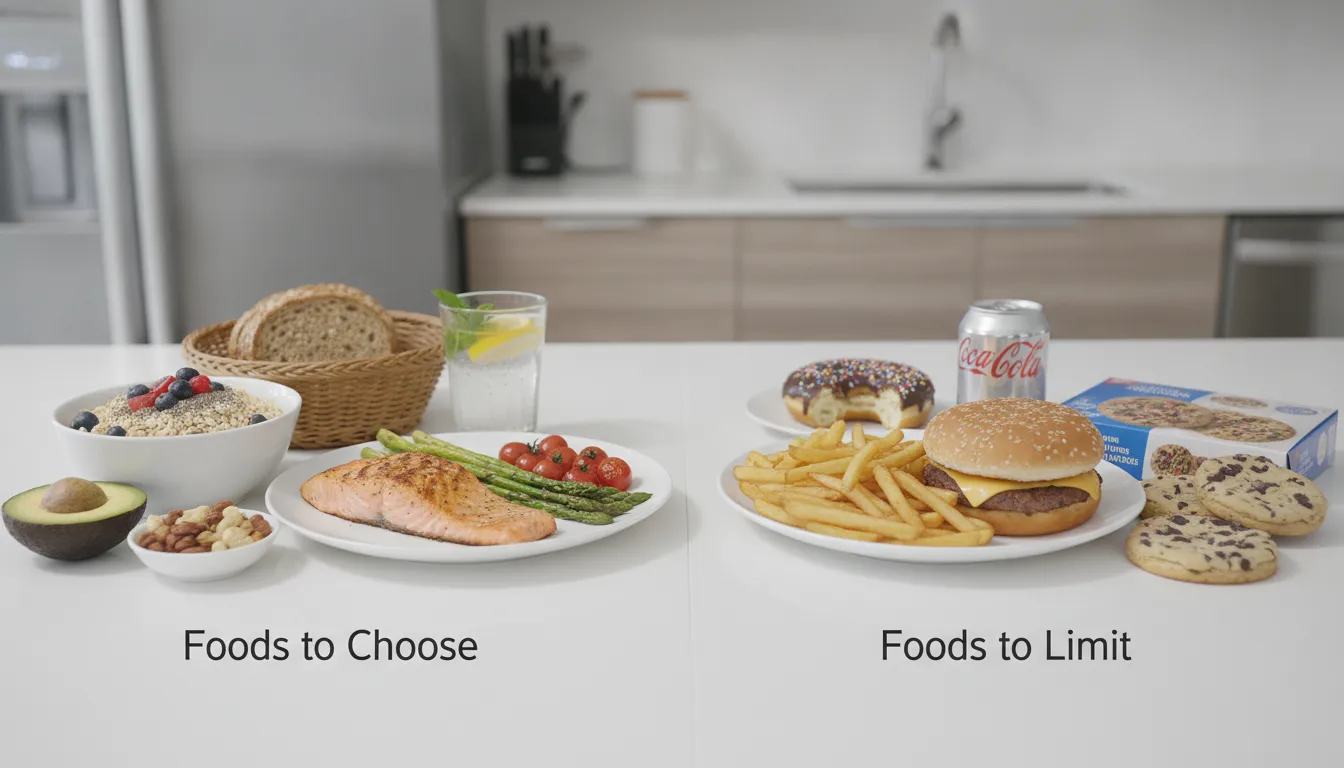
Finding the right foods for diabetes can feel confusing, especially when labels make broad health claims. “Sugar-free,” “natural,” and “low-fat” do not always tell you how a product may affect your blood glucose, hunger, or heart health. A healthy diet for diabetics looks beyond marketing terms and considers total carbohydrates, fiber, added sugar, sodium, serving size, and overall nutrition. It also leaves room for personal preferences and occasional treats. Whether you want steadier glucose readings, gradual weight loss, or more energy during the day, this guide will help you make practical food choices without relying on strict rules.
Key Takeaways
- Build balanced meals: Fill half your plate with non-starchy vegetables, one quarter with lean protein, and one quarter with high-fiber carbohydrates. Add a small portion of unsaturated fat and choose water or an unsweetened drink.
- Pay attention to portions and labels: Choose whole grains, beans, whole fruit, lean proteins, and minimally processed foods more often. Check total carbohydrates, fiber, added sugar, sodium, and serving sizes.
- Make your plan personal: Medication, activity, glucose patterns, pregnancy, other health conditions, and weight goals all affect meal timing and portions. Work with a clinician or registered dietitian before making major changes.
What Is a Healthy Diet for Diabetes?
A healthy diet for diabetes is not a list of forbidden foods. It is a balanced eating pattern that supports blood glucose management, heart health, energy, and a healthy weight. The best approach depends on your medications, activity level, food preferences, schedule, and health goals.
Most diabetes-friendly meals include high-fiber carbohydrates, protein, unsaturated fats, and plenty of non-starchy vegetables. Portion size and meal timing matter, too. You usually do not need to eliminate carbohydrates, but choosing nutrient-rich sources and eating consistent portions may make blood glucose easier to manage.
A practical meal might include roasted vegetables, grilled salmon, and a small serving of quinoa. Another could include beans, brown rice, avocado, and a side salad. The foods can change based on your culture, budget, and preferences while still following the same basic structure.
The American Diabetes Association’s nutrition guidance emphasizes flexible, sustainable choices rather than rigid rules. If you use insulin, take medications that can cause low blood sugar, or have another health condition, work with your care team before making major changes to your eating pattern.
Balance high-fiber carbs, protein, healthy fats, and vegetables
A balanced meal combines foods that provide different nutrients. High-fiber carbohydrates, such as oats, beans, lentils, quinoa, barley, and whole-grain bread, provide energy and support digestive health. Fiber may also help you feel satisfied after eating.
Add protein from foods such as eggs, fish, chicken, tofu, Greek yogurt, or beans. Include unsaturated fats from avocado, nuts, seeds, or olive oil, then fill much of the meal with non-starchy vegetables. This combination can make meals more filling and may slow the rate at which carbohydrates affect blood glucose.
MedlinePlus guidance includes fruits, vegetables, whole grains, lean protein, and low-fat or nonfat dairy as part of a nutritious diabetes eating plan. You can adjust the foods and portions to suit your needs.
Manage carb quality, portions, and timing
Carbohydrates have the greatest direct effect on blood glucose, but the type and amount matter. Whole grains, beans, lentils, fruit, and starchy vegetables provide carbohydrates along with fiber and other nutrients. Refined grains, sweets, and sugary drinks usually provide fewer nutrients per serving.
Eating similar amounts of carbohydrates at regular meals may help some people maintain more predictable glucose levels. The CDC’s meal planning guidance explains that eating carbohydrates with protein, fat, or fiber can affect how quickly blood sugar rises.
Your needs may change based on your medication, exercise, and glucose patterns. If you use insulin or a medication that can cause low blood sugar, ask your care team how to time meals and carbohydrates safely. Do not make major changes to your carbohydrate intake without medical guidance.
Choose nutrient-dense foods over rigid rules
Nutrient-dense foods provide vitamins, minerals, fiber, protein, or healthy fats for the calories they contain. Examples include vegetables, beans, lentils, eggs, fish, plain yogurt, nuts, seeds, whole fruit, and whole grains.
This approach leaves room for flexibility. You might enjoy a small dessert with a balanced meal, make a family recipe with a few ingredient changes, or include a favorite food that does not fit a standard meal plan perfectly. The goal is to create an eating pattern you can follow consistently, not to make every meal flawless.
Small swaps can make meals more nutritious without making them feel restrictive. Try whole-grain toast instead of white toast, water instead of soda, or beans in place of some refined carbohydrates. The American Diabetes Association’s eating guidance offers practical ideas for building balanced meals.
Support blood sugar, heart health, and weight goals
Diabetes and heart health are closely connected, so your eating pattern should support more than blood glucose alone. Vegetables, legumes, whole grains, fish, nuts, seeds, and unsaturated fats can all fit into a heart-supportive diet. Limiting excess sodium, added sugar, and saturated fat may also support cardiovascular health.
If weight loss is one of your goals, focus on satisfying meals instead of severe restriction. Protein, fiber, and healthy fats can help you feel full, while portion awareness may reduce calorie intake without eliminating entire food groups. A sustainable plan is generally easier to maintain than a short-term diet.
Your healthcare team can connect your food choices with your glucose readings, medication, exercise routine, and weight goals. The National Institute of Diabetes and Digestive and Kidney Diseases also recommends considering food, physical activity, and diabetes management together.
Include whole fruit and other carbs
Whole fruit can fit into a diabetes-friendly eating pattern. Fruit contains carbohydrates, but it also provides fiber, vitamins, minerals, and water. Berries, apples, pears, oranges, and grapefruit can add sweetness and nutrition to meals or snacks.
Because fruit counts as a carbohydrate, consider its portion and how it fits into your overall meal. Pairing fruit with protein or fat, such as an apple with peanut butter or berries with plain Greek yogurt, can create a more satisfying snack. Your glucose response may vary, so use your care plan and readings as a guide.
Fruit juice usually contains less fiber and is easier to consume quickly than whole fruit. For that reason, whole fruit is often the more filling choice. The American Diabetes Association explains fruit’s place in diabetes meal planning, including its carbohydrate and fiber content.
Compare Mediterranean and DASH-style eating patterns
Mediterranean-style and DASH-style eating patterns can both provide a useful framework for diabetes-friendly meals. A Mediterranean pattern emphasizes vegetables, fruit, beans, whole grains, fish, olive oil, nuts, and other minimally processed foods. It generally includes smaller amounts of red meat, sweets, and highly processed foods.
DASH stands for Dietary Approaches to Stop Hypertension. This pattern focuses on reducing sodium and including foods rich in potassium, calcium, magnesium, fiber, and protein. It commonly includes vegetables, fruit, whole grains, beans, low-fat dairy, fish, poultry, and nuts.
You do not have to follow either pattern perfectly. Combine elements from both based on your preferences and health needs. For example, cook with olive oil, add beans to meals, choose whole grains, and season food with herbs instead of relying heavily on salt. The CDC’s meal planning resource compares these approaches.
Follow personalized nutrition therapy and ADA guidance
There is no single meal plan that works for everyone with diabetes. Your nutrition needs may depend on whether you have type 1, type 2, or gestational diabetes, along with your medications, kidney health, cholesterol levels, activity, and weight goals.
A registered dietitian nutritionist or certified diabetes care and education specialist can help you create a practical plan. They may review your usual meals, glucose patterns, exercise schedule, work routine, and barriers such as limited time or a tight grocery budget. Then, they can help you decide how much carbohydrate to include and how to adjust meals safely.
Personalized guidance is especially important if you take insulin, experience low blood sugar, have kidney disease, are pregnant, or plan to make significant dietary changes. MedlinePlus recommends individualized meal planning based on medications, health conditions, lifestyle, food preferences, and personal goals.
Correct myths about sugar-free, low-fat, and “natural” foods
A food labeled sugar-free is not automatically low in carbohydrates or calories. It may contain starches, sugar alcohols, or other ingredients that affect digestion and blood glucose. Check the total carbohydrate, fiber, serving size, and ingredient list instead of relying on the front-of-package claim.
Low-fat products are not always the better choice, either. Some contain added sugar or extra starch to improve their taste and texture. Foods with unsaturated fats, such as avocado, nuts, seeds, and olive oil, can fit into a balanced meal when portions match your needs.
The word “natural” also says little about a food’s effect on blood sugar. Honey, coconut sugar, and fruit juice can still contribute carbohydrates or added sugars. Most foods can fit into a diabetes-friendly eating pattern in appropriate portions, so focus on the full nutrition profile rather than eliminating an entire food group.
Which Foods Should a Healthy Diabetes Diet Include?
A healthy diabetes diet can include a wide range of foods. You do not need to eliminate all carbohydrates or follow a rigid menu to support your health. A more practical approach is to build meals around high-fiber carbohydrates, non-starchy vegetables, protein, and unsaturated fats. These foods can support steadier blood sugar levels, heart health, energy, and weight-management goals.
Your ideal food choices and portions may depend on your diabetes type, medications, activity level, glucose patterns, and other health conditions. For example, someone who exercises regularly may have different carbohydrate needs from someone who is less active. A registered dietitian or diabetes care team can help you adjust your meals and meal timing. The American Diabetes Association’s nutrition guidance focuses on creating a sustainable eating pattern instead of following one “perfect” diet.
It also helps to think about your meals as a whole. Pairing carbohydrates with protein, fiber, or healthy fats may help you feel satisfied for longer than eating carbohydrates alone. You can use the ideas below to build meals that fit your schedule, budget, culture, and preferences.
Choose leafy greens and other non-starchy vegetables
Non-starchy vegetables are a useful foundation for diabetes-friendly meals. Leafy greens, broccoli, cauliflower, green beans, mushrooms, peppers, cucumbers, tomatoes, and zucchini provide fiber, vitamins, and minerals while contributing relatively few carbohydrates per serving.
Try filling about half your plate with vegetables at lunch and dinner. Add spinach to eggs, roast broccoli with chicken, or keep washed salad greens ready for quick meals. Frozen vegetables can work just as well as fresh options and often make meal planning easier.
Preparation affects the overall nutrition of a vegetable dish. Vegetables covered in creamy sauces, breading, or added sugar may contain more calories, sodium, or carbohydrates than plain roasted, steamed, or sautéed options. The CDC’s diabetes meal-planning guidance recommends choices such as broccoli, spinach, green beans, and salad.
Eat beans, lentils, and high-fiber whole grains
Beans and lentils provide a combination of carbohydrates, plant-based protein, and fiber. Add black beans to a grain bowl, use lentils in soup, or mix chickpeas into a salad. Because beans and lentils contain carbohydrates, include them in your meal’s carbohydrate portion and pay attention to serving size.
High-fiber whole grains can also fit into a diabetes meal plan. Consider oats, barley, quinoa, brown rice, bulgur, or whole-wheat bread more often than refined grains. Fiber can slow digestion and help you feel satisfied after eating.
Read labels carefully because products marked “multigrain” or “wheat” are not always made mostly from whole grains. Look for “whole” listed as the first ingredient when choosing bread or other grain products. MedlinePlus’ diabetic diet guidance lists whole-wheat products, brown rice, barley, quinoa, and oats as nutritious choices.
Include whole fruit, such as berries, apples, and citrus
Whole fruit can be part of a healthy diabetes diet. Berries, apples, oranges, grapefruit, pears, and other fruit provide fiber, vitamins, and minerals. Their natural sweetness can also satisfy a dessert craving without added sugar.
Since fruit contains carbohydrates, include it in your meal or snack plan rather than treating it as carbohydrate-free. Try a small apple with peanut butter, berries with plain yogurt, or an orange with a handful of nuts. Pairing fruit with protein or healthy fat can make a snack more satisfying.
Choose whole fruit more often than juice or blended drinks. Juice usually contains less fiber, and it can be easy to drink more carbohydrate than you intended. The American Diabetes Association explains that fruit counts as a carbohydrate while still providing important nutrients and fiber.
Choose plain dairy and unsweetened fortified alternatives
Plain dairy foods can provide protein, calcium, and other nutrients. Options include plain Greek yogurt, unsweetened yogurt, milk, and cottage cheese. Check the nutrition label on flavored products because some contain considerable amounts of added sugar, even when they seem like nutritious choices.
If you prefer plant-based alternatives, look for unsweetened, fortified products. Unsweetened soy milk often provides protein comparable to dairy milk, while fortified almond, oat, or pea beverages may provide calcium and vitamin D. Nutrient content varies, so compare labels before choosing.
Dairy products contain different amounts of carbohydrate, fat, and protein. Greek yogurt may be higher in protein than regular yogurt, while flavored varieties may contain added sugar. MedlinePlus recommends low-fat or nonfat dairy, although your care team can help you choose options that fit your overall health goals.
Eat lean protein, eggs, fish, and plant-based options
Protein can make meals more filling and help balance carbohydrate-containing foods. Include skinless chicken, turkey, eggs, fish, tofu, tempeh, beans, lentils, and nuts. Your protein needs may vary, so ask your clinician for guidance if you have kidney disease or another condition that affects your diet.
For a quick weekday meal, pair grilled chicken or tofu with roasted vegetables and a serving of brown rice. Eggs can work for breakfast, while tuna, salmon, or beans can add protein to a lunch salad. Plant-based proteins can also provide fiber, which supports fullness and digestive health.
Some protein foods contain more saturated fat or sodium than others. Choose fresh or minimally processed options more often, and compare labels on packaged meat substitutes. The CDC recommends protein choices such as fish, chicken, beans, and nuts as part of a balanced meal plan.
Add nuts, seeds, avocado, and olive oil
Unsaturated fats from nuts, seeds, avocado, and olive oil can add flavor and satisfaction to meals. Sprinkle chia or pumpkin seeds over plain yogurt, add avocado to a salad, or use olive oil in a homemade dressing. A small handful of nuts can make a convenient snack between meetings or after a workout.
These foods are nutrient-dense, but they are also high in calories, so portions still matter. Measure oils with a teaspoon or tablespoon instead of pouring directly from the bottle. For nuts and seeds, choose unsalted varieties when possible and stick with a small handful.
Pairing unsaturated fat with a high-fiber carbohydrate can create a balanced snack. Try whole-grain toast with avocado or an apple with nut butter. The American Diabetes Association includes nuts, seeds, avocados, olives, and olive oil among sources of healthy fats.
Choose fatty fish and other heart-healthy foods
Heart health deserves special attention because diabetes is associated with a higher risk of cardiovascular disease. Fatty fish, including salmon, sardines, trout, and mackerel, provide omega-3 fats and protein. Include fish regularly if you enjoy it and have no dietary restrictions.
You can serve salmon with vegetables and quinoa, add canned sardines to whole-grain toast, or use trout in a simple dinner bowl. If fish is not part of your diet, focus on other unsaturated fat sources such as walnuts, flaxseeds, chia seeds, avocado, and olive oil.
Preparation also matters. Baking, grilling, steaming, or roasting usually adds less saturated fat than deep-frying. Limit fish prepared with heavy breading or creamy sauces, and compare sodium levels when buying canned or packaged products. Ask your clinician about fish choices if pregnancy, allergies, or another health concern applies.
Drink water and unsweetened beverages
Water is a practical everyday choice because it supports hydration without adding carbohydrates or calories. Keep a reusable bottle nearby at work, in the car, or at the gym. Sparkling water, unsweetened iced tea, and plain coffee can also fit into a diabetes-friendly eating pattern.
Sugary drinks, sweetened coffee beverages, energy drinks, and fruit juice can add a substantial amount of carbohydrate without making you feel full. If you drink them often, replace one serving at a time with water or unsweetened tea. Adding lemon, lime, cucumber, or fresh mint can make water more appealing.
Check flavored waters and drink powders because some contain added sugar. “No added sugar” does not always mean carbohydrate-free, particularly when a drink contains fruit juice. The CDC recommends water or low-calorie drinks such as unsweetened iced tea.
Match food choices to your culture, budget, and preferences
The best diabetes eating plan is one you can follow consistently. Your meals should reflect your culture, schedule, cooking skills, budget, and food preferences. You do not need to replace every familiar dish. Instead, look for practical adjustments that preserve the flavors and foods you enjoy.
For example, add extra vegetables to tacos, choose beans alongside a smaller serving of rice, or use grilled chicken instead of fried chicken. Buy frozen vegetables, canned beans with no added salt, and seasonal produce to manage costs. Rinsing canned beans can also remove some of the sodium.
Your plan may look different from someone else’s, and that is expected. Pay attention to how meals affect your hunger and glucose readings, then discuss useful patterns with your care team. The ADA’s nutrition resources recognize that food choices are shaped by culture, memories, community, and personal circumstances.
Which Foods Should You Limit or Avoid?
A diabetes-friendly diet does not require a long list of forbidden foods. Most people can enjoy an occasional dessert, restaurant meal, or favorite family recipe when the portion and frequency fit their personal plan. The goal is to identify foods that make it harder to manage blood sugar, hunger, blood pressure, cholesterol, or weight.
Look at the full meal instead of focusing on one ingredient. A sweetened drink alongside a high-carbohydrate meal may affect blood glucose more than a small dessert after a balanced meal. Your diabetes type, medications, activity level, and health goals also matter. The American Diabetes Association’s nutrition guidance can help you understand how food choices fit into your diabetes care plan.
If you use insulin or medication that can cause low blood sugar, speak with your healthcare professional before making major carbohydrate changes. A registered dietitian or telehealth care team can help you create a practical plan that supports glucose management, metabolic health, and weight goals without unnecessary restrictions.
Focus on portions and frequency instead of bans
Strict food rules can make healthy eating difficult to maintain. Instead of labeling a food as completely off-limits, consider how often you eat it, how much you typically have, and what you could pair with it. For example, you might enjoy a small dessert after dinner rather than eating sweets alone when you are very hungry.
Portion size matters because even nutritious foods contain carbohydrates or calories. A large serving of brown rice, fruit, or oatmeal can affect blood sugar more than a smaller serving. Try using a smaller plate, measuring portions at home, or dividing restaurant meals before you start eating.
The American Diabetes Association recommends practical food swaps instead of complicated rules. You might choose plain yogurt with berries instead of sweetened yogurt, or whole-grain toast with eggs instead of a pastry. Small changes are easier to repeat when you are balancing work, family, exercise, and medical appointments.
Limit sugary drinks, juice, sweets, and added sugars
Sugary drinks can raise blood glucose quickly and may leave you hungry soon afterward. Common examples include regular soda, sweet tea, lemonade, sports drinks, energy drinks, flavored coffee, and sweetened fruit beverages. Juice can also contain a significant amount of sugar without the fiber found in whole fruit. MedlinePlus includes sugary drinks and sweets among foods to limit in a diabetes eating plan.
Water is a simple everyday choice, but unsweetened sparkling water, plain tea, and coffee can also fit. If you regularly add sugar or flavored syrup to drinks, reduce the amount gradually. Citrus, mint, cinnamon, or a small amount of unsweetened milk can add flavor without making a drink heavily sweetened.
Sweets such as candy, cookies, cake, ice cream, and sweetened cereal do not have to disappear completely. Keep portions modest and consider eating them with or after a meal that includes protein and fiber. Check total carbohydrate and added sugar on the label, since a package that looks small may contain several servings.
Reduce refined grains and highly processed carbs
Refined carbohydrates are foods made from grains that have had much of their fiber removed. Examples include white bread, white rice, regular pasta, many crackers, pastries, and packaged snack foods. These choices can be convenient, but they often provide less fiber and may be easier to overeat.
The CDC’s diabetes meal planning guidance recommends limiting added sugars and refined grains, including white bread, white rice, and white pasta. You do not need to replace every familiar food at once. Start with one meal, such as swapping white toast for whole-grain toast at breakfast.
When choosing packaged grains, compare the Nutrition Facts panel and ingredient list. Look for more fiber per serving and a whole grain listed near the beginning of the ingredients. Brown rice, quinoa, barley, oats, whole-wheat pasta, and high-fiber breads may help you feel satisfied with a reasonable portion. Whole-grain foods still contain carbohydrates, so serving size remains important.
Limit fried foods and excess saturated fat
Fried foods can provide many calories in a small serving, especially when coated in refined flour or breadcrumbs. French fries, fried chicken, onion rings, and fried appetizers may also contain substantial amounts of sodium and saturated fat. Eating them often can make weight management and heart health more difficult.
Try baking, grilling, roasting, air frying, or sautéing with a small amount of olive or canola oil. These methods can preserve flavor without relying on a heavy coating or large amount of oil. If you order fried food, consider a smaller portion and add a side salad or non-starchy vegetables.
Saturated fat is found in foods such as fatty cuts of meat, bacon, sausage, butter, cream, full-fat cheese, and some desserts. It can raise LDL cholesterol, which is one reason the American Diabetes Association recommends choosing healthier fats. Replace some saturated fats with unsaturated fats from avocado, nuts, seeds, olive oil, and fatty fish.
Reduce processed meats and high-sodium packaged foods
Processed meats include bacon, sausage, hot dogs, deli meats, pepperoni, and some packaged meat snacks. They can contain substantial amounts of sodium and saturated fat, and they are often served with refined carbohydrates such as white bread or crackers. You do not need to remove them from your kitchen overnight, but eating them less often is a practical change.
Try using roasted chicken, tuna, salmon, eggs, beans, lentils, or tofu in sandwiches, salads, bowls, and wraps. If you buy deli meat, compare labels for lower-sodium options and keep portions moderate. Rinsing canned beans and choosing no-salt-added vegetables can also reduce sodium in quick meals.
Packaged soups, frozen dinners, instant noodles, sauces, chips, and ready-to-eat snacks can add sodium throughout the day. Read the serving size before comparing products, since one package may contain more than one serving. The CDC explains how meal planning can help compare nutrition information, including sodium, carbohydrate, and added sugar.
Consider alcohol and medication-related blood sugar risks
Alcohol can affect blood sugar in different ways. Some drinks contain added sugar and carbohydrates, while alcohol itself may increase the risk of low blood sugar for people using insulin or certain diabetes medications. This effect can last for hours, particularly when drinking without food.
If you drink, ask your healthcare professional how alcohol fits with your medication and glucose plan. MedlinePlus recommends moderation, defined as no more than one standard drink per day for women and no more than two for men. A standard drink is smaller than many restaurant pours, so it helps to understand the serving size.
Avoid drinking on an empty stomach, and do not assume that eating a high-carbohydrate meal removes the risk of low blood sugar. Check your glucose as directed, keep a source of fast-acting carbohydrate available if your care team recommends it, and never drive after drinking. If you are pregnant, trying to become pregnant, or have been advised to avoid alcohol, follow your clinician’s guidance.
Check carbs, fiber, added sugar, sodium, and serving sizes
The Nutrition Facts label can help you compare foods, but total carbohydrate is often more useful than sugar alone. Total carbohydrate includes sugars, starches, and fiber. A food with little added sugar may still contain a significant amount of starch, while a food with naturally occurring sugar may also provide fiber and other nutrients.
Next, check the serving size. If you eat twice the listed serving, you also consume twice the carbohydrate, calories, and sodium. Look for fiber, since high-fiber foods may support fullness and lead to a slower rise in blood glucose. Added sugar and sodium are also useful numbers to compare between similar products.
Your ideal carbohydrate intake is personal. It may depend on your medications, activity level, eating pattern, and glucose targets. The CDC recommends working with a doctor or registered dietitian to determine an appropriate carbohydrate target. If you notice repeated glucose changes after a specific meal, record the food, portion, timing, and reading to discuss with your care team.
Look beyond “sugar-free,” “natural,” and “low-fat” claims
Marketing claims can make a product sound healthier than it is. “Sugar-free” does not mean carbohydrate-free, and some products contain sugar alcohols or other sweeteners that may cause digestive symptoms. “Natural” describes how a product is marketed, not whether it is low in carbohydrate, sodium, saturated fat, or calories.
“Low-fat” products may contain added sugar or refined starch to improve flavor and texture. A granola bar, cereal, flavored yogurt, or packaged snack may appear wholesome while providing little fiber and a large amount of added sugar. Compare the full Nutrition Facts panel instead of relying on the front of the package. The American Diabetes Association explains how to read food labels, including serving size and nutrient information.
You can still choose convenience foods when they fit your needs. Look for a reasonable serving size, useful fiber, moderate sodium, and an ingredient list you recognize. When a label is confusing, compare it with a similar product or ask a registered dietitian for help applying it to your personal meal plan.
How Can You Manage Portions and Carbs?
Managing portions and carbohydrates does not mean cutting carbs completely. Carbohydrates provide energy and can be part of a balanced diabetes meal plan. The aim is to understand how much carbohydrate you eat, choose more nutritious sources, and notice how meals affect your blood glucose.
Your ideal carbohydrate intake depends on factors such as your diabetes type, medications, activity level, body size, appetite, and health goals. A registered dietitian or diabetes care team can help you create a plan that fits your routine, whether you are working long hours, caring for children, or exercising regularly. The American Diabetes Association’s nutrition guidance offers general information to discuss with your care team.
Portion management is a skill, not a test you pass or fail. Start by making one change at a time, such as measuring cereal, adding vegetables to lunch, or pairing fruit with protein. You can also use a food journal or glucose tracking app to connect meals with your readings, if your clinician recommends it.
Try to keep meals reasonably consistent, especially if you take insulin or medication that can cause low blood sugar. Regular meals may make glucose patterns easier to understand. However, your plan should remain flexible enough for exercise, travel, social events, and changes in hunger.
Count total carbs instead of sugar alone
Sugar is one type of carbohydrate, but it is not the only source. Fruit, milk, beans, oats, rice, potatoes, and bread also contain carbohydrates, even when they have no added sugar. For that reason, check the total carbohydrate line on a nutrition label instead of looking only at the sugar line.
When comparing foods, review total carbohydrates, fiber, and added sugar. Fiber appears within total carbohydrates on most labels, but the body handles it differently from digestible carbohydrates. Your clinician may recommend a specific carb-counting method, particularly if you use insulin.
For packaged foods, multiply the carbohydrate amount by the number of servings you plan to eat. For restaurant meals, estimates may be less precise, so use ingredients and portion size as practical guides. The CDC’s diabetes meal planning guidance explains how meal timing and carbohydrate choices can fit into diabetes care.
Choose high-fiber carb sources
High-fiber carbohydrates often provide more nutrients and may keep you satisfied longer than highly refined choices. Options include oatmeal, beans, lentils, berries, apples, sweet potatoes, brown rice, whole-grain pasta, and whole-grain bread. Add protein or unsaturated fat to create a more filling meal.
You do not need to change everything at once. Try adding beans to soup, choosing oatmeal instead of a sugary breakfast cereal, or replacing some white rice with brown rice. When shopping for bread or crackers, check the ingredient list. Words such as “multigrain” do not always mean the product is made mostly with whole grains.
Increase fiber gradually and drink enough water, especially if your current diet is low in fiber. This can make the change more comfortable and support regular digestion. The National Institute of Diabetes and Digestive and Kidney Diseases provides additional guidance on eating and physical activity with diabetes.
Compare label serving sizes with actual portions
A serving size on a package is a standard reference amount. It is not necessarily the portion you should eat. If a label lists half a cup as one serving and you eat one cup, you have eaten two servings. You will also need to count twice the listed calories, carbohydrates, and other nutrients.
This distinction is easy to miss with cereal, crackers, pasta, frozen meals, and snack foods. Before eating, check the number of servings in the container and compare it with the amount you place on your plate. A small package is not always a single serving.
Restaurant portions can be larger than the amount you need for one meal. Consider sharing an entrée, ordering a smaller option, or placing half the meal in a takeaway container before you start eating. The FDA’s nutrition label guide explains how to compare serving sizes, total carbohydrates, fiber, and added sugar.
Use hand guides, measuring cups, and food scales
Measuring every food forever is not necessary, but cups and food scales can teach you what familiar portions look like. Use them for foods that are easy to overestimate, such as rice, pasta, cereal, nuts, oils, granola, and nut butter. After a few weeks, you may be able to estimate many portions more comfortably.
A hand guide can help when you are eating away from home. A palm-sized portion is a general starting point for protein, a cupped hand can represent a portion of carbohydrates, and a thumb-sized amount can estimate fats such as oil or nut butter. These are visual guides, not medical rules, and your needs may differ.
For snacks, place one portion in a bowl instead of eating from the package. Keep serving dishes away from the table if second helpings are difficult to resist. At restaurants, ask for half your meal to be packed before it arrives.
Pair carbs with protein, fiber, or unsaturated fat
Carbohydrates can be more satisfying when combined with protein, fiber, or unsaturated fat. Try whole-grain crackers with hummus, fruit with plain yogurt, or a small amount of nut butter with an apple. For meals, add beans, tofu, chicken, fish, or eggs to dishes that include rice, pasta, potatoes, or tortillas.
This approach does not stop blood glucose from rising, and it does not make a large carbohydrate portion unlimited. It helps create a balanced meal that may keep you satisfied for longer. Include non-starchy vegetables when possible, such as leafy greens, broccoli, peppers, cucumbers, or green beans.
Aim for variety rather than eliminating an entire food group. A meal with vegetables, protein, a high-fiber carbohydrate, and a small amount of unsaturated fat can work for many eating styles. The CDC’s guidance on food and physical activity explains how carbohydrates, protein, and fiber fit into diabetes meal planning.
Spread carbs throughout the day when appropriate
Eating most of your carbohydrates in one meal may affect your blood glucose differently than distributing them across breakfast, lunch, dinner, and planned snacks. Some people find that eating a similar amount of carbohydrate at each meal creates more predictable readings. Others need a different pattern based on medication, exercise, work hours, or appetite.
A repeatable schedule can make planning easier. You might include oatmeal at breakfast, a measured serving of beans or whole grains at lunch, and a small portion of potatoes or whole-grain pasta at dinner. Snacks can be added when they fit your hunger, activity, and care plan.
Do not change your carbohydrate intake or medication timing without medical advice. If you use insulin or a medication that can cause low blood sugar, ask your clinician how to coordinate meals, snacks, and exercise. The American Diabetes Association’s carb-counting information can help you learn the basic concepts.
Build balanced snacks for work, errands, and exercise
A planned snack can help when you are working late, commuting, caring for children, or heading to the gym. Try an apple with peanut butter, plain Greek yogurt with berries, vegetables with hummus, a boiled egg with whole-grain crackers, or a small portion of nuts with fruit.
Pack snacks in individual containers so the portion is clear. Keep shelf-stable choices in your desk, car, or gym bag, and refrigerate foods that need to stay cold. If you exercise, your snack may depend on the workout’s length and intensity, as well as when you last ate.
People who take insulin or certain diabetes medications may need carbohydrate before or after exercise to reduce the risk of low blood sugar. Ask your care team for specific recommendations. If they advise you to carry fast-acting carbohydrate, keep an appropriate source with you during workouts and longer trips.
Adjust portions for hunger, activity, and glucose patterns
Your portions may need to change from one day to the next. A long workout, poor sleep, illness, medication change, or demanding workday can affect hunger and blood glucose. Rather than treating your meal plan as rigid, use these changes as information to discuss with your care team.
If recommended by your clinician, keep brief notes about meals, portions, exercise, medication timing, and glucose readings. Look for patterns instead of reacting to one number. You may notice that a large evening meal affects your morning reading, or that a planned snack helps before a longer workout.
Do not make major medication or carbohydrate changes on your own. Your plan should account for medications, weight, other health conditions, lifestyle, food preferences, and personal goals. The MedlinePlus guide to a diabetic diet provides an overview of these factors and can support a conversation with your health care team.
Build Balanced Meals With the Diabetes Plate Method
The diabetes plate method offers a practical way to build balanced meals without weighing every ingredient or following a rigid menu. Divide your plate into sections: fill half with non-starchy vegetables, one quarter with lean protein, and one quarter with a high-fiber carbohydrate. Add a small portion of unsaturated fat and choose water or another unsweetened drink.
This structure can support steady energy, fullness, and more consistent carbohydrate portions. It may also make meal planning easier for busy professionals, parents, gym goers, and anyone managing diabetes alongside weight or metabolic health goals. The CDC’s diabetes meal planning guidance includes the plate method as a visual tool for balancing food groups.
The plate method is a starting point rather than a personal prescription. Your portions may need to change based on your diabetes type, medications, activity level, hunger, glucose patterns, and health goals.
Fill half your plate with non-starchy vegetables
Make non-starchy vegetables the largest part of your meal. Try broccoli, spinach, green beans, zucchini, peppers, mushrooms, tomatoes, cucumbers, or a leafy green salad. These foods generally contain fewer carbohydrates than grains, potatoes, and other starchy foods, while providing fiber, vitamins, minerals, and volume.
Vegetables can make meals more filling without adding a large amount of energy. Roast a tray of vegetables for several meals, keep washed salad greens in the refrigerator, or add frozen vegetables to a quick stir-fry or soup.
Preparation matters, especially when sauces add extra sugar, sodium, or calories. Choose steamed, roasted, grilled, or sautéed vegetables most often. Measure dressings and oils rather than pouring them freely, and check packaged sauces for added sugar and sodium. The CDC’s meal planning recommendations can help you identify practical ways to include more non-starchy vegetables.
Fill one quarter with lean protein
Use about one quarter of your plate for protein. Options include skinless chicken or turkey, fish, eggs, tofu, tempeh, beans, lentils, and plain Greek yogurt. Protein helps maintain muscle and may help you feel satisfied between meals, which can make portion management easier.
Choose preparation methods such as baking, grilling, roasting, poaching, or air frying instead of deep frying. Fatty fish, including salmon, sardines, and trout, also provides omega-3 fats. The American Diabetes Association’s nutrition guidance includes both animal and plant-based protein choices, so you can build meals around your preferences, budget, and culture.
Keep in mind that some protein foods also contain carbohydrates. Beans, lentils, milk, and yogurt can all fit into a balanced eating pattern, but you may need to account for their carbohydrate content when planning a meal.
Fill one quarter with high-fiber carbs
Reserve about one quarter of your plate for a carbohydrate food that provides fiber and other nutrients. Choices include brown rice, quinoa, oatmeal, whole-grain pasta, sweet potatoes, beans, lentils, and whole-grain bread. Fiber can slow digestion and may support a more gradual rise in blood sugar after eating.
The word “whole grain” does not mean unlimited portions. A large serving of brown rice or whole-grain pasta can still provide more carbohydrates than you need at one meal. Use the plate layout as a visual guide, then adjust the serving to fit your care plan.
You can combine carbohydrate sources with protein and vegetables for a more balanced meal. For example, try a bowl with roasted vegetables, chicken or tofu, a small serving of quinoa, and beans. Since beans contain both protein and carbohydrates, your care team or registered dietitian can help you decide how to count them.
Add a small portion of unsaturated fat
Include a modest serving of unsaturated fat for flavor and nutrition. Examples include avocado, nuts, seeds, olives, and oils such as olive or canola oil. Fat can make meals more satisfying, but it contains a lot of energy in a small volume, so a measured portion is usually enough.
Add a few slices of avocado to a salad, sprinkle seeds over roasted vegetables, or use a measured teaspoon or tablespoon of oil for cooking or dressing. Nuts and seeds make convenient snacks, but portion them into a small container instead of eating directly from the bag.
Unsaturated fats are generally a better everyday choice than trans fats and large amounts of saturated fat. Still, the right amount depends on your calorie needs, weight goals, medications, and overall eating pattern. If you are working toward weight loss, measuring oils, dressings, and nut portions can help you stay aware of how much you are eating.
Choose water or an unsweetened beverage
Choose water with meals whenever possible. Sparkling water, unsweetened iced tea, plain tea, and coffee without added sugar can also fit into a diabetes-friendly eating pattern. These options provide fluids without the added carbohydrates found in many sweetened drinks.
Soda, sweet tea, energy drinks, sweetened coffee, and fruit drinks can raise blood sugar quickly while providing little nutritional value. Juice may also contain a significant amount of sugar, even when the label says “no added sugar.” If plain water feels repetitive, add lemon, lime, cucumber, or fresh herbs for flavor.
Alcohol may affect blood sugar, appetite, and some diabetes medications. If you drink, ask your healthcare professional how to do so safely and whether you need to pair it with food. The CDC’s diabetes meal planning guidance also recommends choosing water or low-calorie beverages more often.
Adapt the plate method for bowls and mixed dishes
The plate method does not require every ingredient to stay separate. You can use the same proportions in bowls, wraps, soups, casseroles, salads, and mixed dishes. Start by identifying the vegetables, protein, and carbohydrate, then adjust the amounts to create a balanced meal.
For a grain bowl, use plenty of non-starchy vegetables, a serving of chicken or tofu, and a smaller scoop of brown rice or quinoa. For a taco bowl, combine lettuce, peppers, salsa, lean protein, beans, and a measured portion of corn or whole-grain rice. In a casserole, increase the vegetables and protein while reducing the amount of refined pasta, rice, or creamy sauce.
This method can also work with family meals. Serve the vegetables and protein first, then add a portion of the main carbohydrate. The American Diabetes Association’s guidance on healthy eating emphasizes flexibility, so you can adapt familiar recipes without giving up foods that matter to you.
Match portions to your personal carb needs
The plate method provides a useful visual starting point, but it does not determine your exact carbohydrate needs. Your needs may depend on your diabetes type, medications, activity level, body size, glucose readings, and health goals. Someone using mealtime insulin may need a different approach from someone managing blood sugar with lifestyle changes or another medication plan.
Notice how different meals affect your energy, hunger, and glucose levels. Look for patterns instead of reacting to one reading, since blood sugar can vary from day to day. Your healthcare team can help you decide whether your carbohydrate portions, meal timing, or activity routine need adjustment.
A registered dietitian or diabetes care professional can create a meal plan that fits your schedule and food preferences. This support is especially important if you use insulin, experience low blood sugar, are pregnant, or are working toward weight loss. The CDC recommends personalized meal planning with a healthcare professional when your medication or health needs require individual guidance.
Plan Meals for Work, Family, and Fitness
A diabetes-friendly meal plan should fit your real routine. Work deadlines, school pickups, gym sessions, and unexpected errands can all change when and what you eat. Planning a few reliable meals ahead can make balanced choices easier when your schedule gets crowded.
Start with a simple structure: non-starchy vegetables, protein, a high-fiber carbohydrate, and a small amount of unsaturated fat. This combination can support fullness, steady energy, and more consistent portions without requiring you to calculate every detail. The CDC’s diabetes meal planning guidance recommends the plate method as a practical way to build balanced meals.
Your plan does not need to be perfect. Focus on patterns you can repeat, then adjust portions and meal timing based on your glucose readings, activity level, medications, and care team’s guidance. If weight loss is one of your goals, a predictable meal routine can also make it easier to notice when you are eating from hunger, convenience, or habit.
Use a repeatable diabetes-friendly meal template
Use the plate method as a starting point for meals at home or in a packed lunch. Fill half a 9-inch plate with non-starchy vegetables, such as broccoli, green beans, spinach, peppers, or salad. Fill one quarter with lean protein, including chicken, fish, eggs, tofu, beans, or lentils. Use the remaining quarter for a quality carbohydrate, such as brown rice, quinoa, oats, fruit, yogurt, or a small serving of potatoes.
Add a little healthy fat, such as olive oil, avocado, nuts, or seeds. For a bowl or mixed dish, use the same proportions rather than relying on visible plate sections. If you are unsure how much carbohydrate to include, ask a registered dietitian or clinician to tailor portions to your treatment plan. The American Diabetes Association’s nutrition guidance can help you create a flexible eating pattern.
Create a flexible weekly plan and grocery list
Choose three or four meals to rotate during the week instead of planning every meal from scratch. You might prepare chicken, roasted vegetables, and quinoa for lunches, then use those ingredients in a salad, grain bowl, or whole-grain wrap. Add a few low-preparation breakfasts and snacks to cover busy mornings.
Review your calendar before making a grocery list. Note late workdays, workouts, family activities, and meals away from home. Build your list around protein, vegetables, high-fiber carbohydrates, fruit, and simple snacks. Leave room for substitutions when plans change. Long-term habits matter more than one meal, so a flexible routine is often more useful than strict rules. MedlinePlus outlines the importance of including foods from all major food groups.
Prep proteins, vegetables, and whole grains ahead
A short preparation session can make weekday meals easier. Cook a batch of lean protein, such as chicken, turkey, salmon, tofu, eggs, or lentils. Wash and cut vegetables, then roast, steam, or sauté enough for several meals. You can also prepare brown rice, barley, quinoa, or another whole grain and store it in individual containers.
Keep ingredients separate when possible so you can create different meals throughout the week. Roasted vegetables and chicken, for example, can become a salad, bowl, or whole-grain wrap. Refrigerate perishable foods promptly and freeze extra portions if your schedule is unpredictable. Preparing a variety of foods supports the balanced eating pattern recommended in MedlinePlus’s diabetes diet guidance.
Pack balanced meals for work, family, and busy days
Build packed meals with the same balance you use at home. Try a salad with chicken, chickpeas, vegetables, and olive oil dressing; a turkey and vegetable whole-grain wrap with fruit; or a bowl with tofu, brown rice, and roasted vegetables. Include enough food to satisfy you, since an overly small lunch can lead to rushed choices later.
If your mealtimes vary, pack both a meal and a backup snack. Keep an insulated lunch bag and reusable containers ready for commutes, appointments, or long days away from home. When feeding your family, serve the same basic meal and let each person choose portions and toppings. Eating a similar amount of carbohydrate at each meal may help some people manage glucose, but your needs depend on your treatment plan. MedlinePlus recommends planning portions for meals and snacks.
Plan pre- and post-workout meals
Exercise can affect blood sugar during and after a workout, particularly if you use insulin or certain diabetes medications. Ask your clinician how to check glucose, adjust food, and recognize low blood sugar symptoms before changing your exercise routine. Your recommendations may differ based on the workout’s intensity, duration, and timing.
For some people, a small snack with carbohydrate and protein works well before moderate exercise. Options include plain yogurt with berries, an apple with peanut butter, or whole-grain toast with an egg. After exercise, choose a balanced meal with protein, vegetables, and a high-fiber carbohydrate. Carbohydrates provide fuel for physical activity, so focus on quality and portions rather than removing them completely. The CDC’s guidance on physical activity and diabetes covers important safety considerations.
Keep quick snacks and backup meals available
Keep portable options in your desk, gym bag, car, or stroller bag. Try nuts, roasted chickpeas, whole-grain crackers with tuna, fruit, plain Greek yogurt, or vegetables with hummus. Pairing carbohydrate with protein, fiber, or unsaturated fat can make a snack more satisfying and easier to fit into your plan.
Keep backup ingredients available for evenings when cooking is not realistic. Frozen vegetables, canned beans, tuna, eggs, microwaveable brown rice, and low-sodium soup can become a meal in minutes. Check labels for serving size, total carbohydrate, fiber, sodium, and added sugar. Most foods can fit into a diabetes-friendly eating pattern in appropriate portions, as MedlinePlus explains, so focus on practical choices instead of rigid food bans.
Handle restaurants, travel, celebrations, and busy days
Look at a restaurant menu before you arrive, when possible. Choose grilled, baked, steamed, or roasted foods more often, and ask for sauces or dressings on the side. Request substitutions, such as extra vegetables instead of fries, and save part of a large entrée for another meal. When traveling, pack snacks and check whether you will have access to a refrigerator or grocery store.
At celebrations, scan the options first and choose foods you genuinely want. A smaller serving of dessert can fit into your plan when you account for it as part of the meal. Avoid skipping meals to save calories, since arriving extremely hungry can make portions harder to manage. Carry diabetes supplies, medication, and fast-acting carbohydrate if your care team recommends it. The CDC recommends planning meals and snacks ahead to help manage busy days and meals away from home.
Make healthy eating work for weight-loss goals
If weight loss is part of your health plan, focus on portions, satisfaction, and consistency instead of severe restriction. Build meals around vegetables, lean protein, beans, whole grains, and other high-fiber foods. These choices can help you stay full while keeping meals nutrient-dense. Use calorie-dense ingredients, such as oils, nuts, dressings, and cheese, in measured portions rather than removing them completely.
Track patterns that may help you make informed adjustments. For a short period, note meals, hunger, activity, glucose readings, and energy levels. Do not sharply reduce food or carbohydrates without medical guidance, especially if you take insulin or medication that can cause low blood sugar. Your weight-loss plan should account for your diabetes treatment, health history, and goals. A clinician or registered dietitian can help adjust meals while supporting blood sugar control and muscle mass.
Personalize Your Diabetes Diet With Clinical Support
A healthy diabetes diet should fit your treatment plan, schedule, preferences, and health goals. There is no single menu that works for everyone. Your diabetes type, medications, activity level, glucose patterns, budget, and other health conditions all influence which foods and meal timing may work best for you.
Clinical support can help turn general nutrition advice into practical choices. A doctor, registered dietitian, diabetes educator, or qualified telehealth team can review your usual meals and help you make changes that support steadier blood sugar. The CDC recommends personalized diabetes meal planning based on your lifestyle, food preferences, and treatment needs.
Personalization does not mean creating a complicated diet. It may involve adjusting portions, pairing carbohydrates with protein and fiber, planning meals around medication, or finding affordable alternatives to foods you already enjoy. Keep track of questions, glucose readings, and challenges between appointments so your care team can make useful recommendations.
Consider your diabetes type, medications, and health goals
Type 1, type 2, and gestational diabetes can require different nutrition strategies. Your insulin schedule, other medications, kidney health, activity level, and weight goals also matter. A meal plan that works for one person may cause unexpected glucose changes for another.
Start by identifying your priorities. You may want steadier readings, gradual weight loss, more energy, improved heart health, or meals that fit work and family responsibilities. Share those goals with your care team, along with the foods you enjoy and the meals you can prepare consistently. The CDC’s meal planning guidance supports working with a registered dietitian or diabetes educator when additional help is needed.
Coordinate carbs with insulin and other medications
Carbohydrates have the most direct effect on blood glucose, so their amount and timing may need to match your insulin or other medications. This does not mean removing bread, fruit, potatoes, or grains from your diet. It means learning how portions, food quality, and meal timing affect your readings.
Your clinician may suggest eating a similar amount of carbohydrate at each meal or following a prescribed insulin-to-carbohydrate plan. Choose high-fiber options, such as beans, oatmeal, whole grains, and whole fruit, more often than juice or refined snacks. MedlinePlus explains carbohydrate choices for diabetes, but never change medication doses without guidance from your prescriber.
Plan for exercise and low blood sugar risks
Exercise affects how your body uses glucose, sometimes during activity and sometimes for several hours afterward. If you use insulin or certain diabetes medications, you may need to check your glucose, carry a fast-acting carbohydrate, or plan a snack before or after exercise. Your needs depend on your medication, workout intensity, and usual readings.
Ask your care team how to prepare for strength training, cardio, long workouts, or changes in your fitness routine. Regular meals may also help prevent large glucose swings. The CDC recommends discussing personal carbohydrate needs with a doctor or registered dietitian, particularly if exercise often leads to low readings or unexpected highs.
Use glucose readings to identify personal patterns
Glucose checks can show how your body responds to meals, stress, sleep, and exercise. Rather than focusing on one reading, look for patterns over time. You may notice that a large breakfast raises your glucose more than dinner, or that a short walk after meals helps keep readings steadier.
Record useful details alongside your readings, including what you ate, how much you ate, when you exercised, and how you felt. Bring this information to your care team before making major changes. The American Diabetes Association explains glucose monitoring and how readings can support informed conversations about food and treatment.
Adjust meals for weight loss and metabolic health
If weight loss is one of your goals, focus on gradual changes rather than severe restriction. A clinician or dietitian can help adjust portions, protein, fiber, meal timing, and overall calorie intake while supporting safe blood sugar levels. This matters especially if you take medication that can cause hypoglycemia.
Practical changes may include adding vegetables to meals, choosing water instead of sugary drinks, preparing more food at home, or building snacks around protein and fiber. Ask about Diabetes Self-Management Education and Support if you want structured help. A diabetes educator can connect your food choices with weight, glucose, and broader metabolic health goals.
Adapt meals for pregnancy, gestational diabetes, and postpartum needs
Pregnancy and postpartum recovery call for individualized nutrition support. If you have gestational diabetes, your care team may recommend specific carbohydrate portions, meal timing, and glucose targets that support your health and your baby’s development. These recommendations may differ from plans used outside pregnancy.
Avoid making major calorie or carbohydrate changes without medical guidance. Your needs can shift throughout pregnancy and after delivery, particularly while breastfeeding or recovering from birth. The American Diabetes Association’s nutrition guidance emphasizes the value of an overall eating pattern rather than judging one food or meal. Ask your obstetric provider, diabetes clinician, or dietitian for stage-appropriate adjustments.
Account for allergies, culture, budget, and dietary restrictions
A meal plan works best when it fits your real life. Tell your care team about food allergies, cultural or religious traditions, vegetarian or vegan preferences, cooking equipment, grocery access, and budget limits. These details help them suggest meals you can prepare and enjoy regularly.
You do not need specialty products to eat well with diabetes. Beans, lentils, eggs, frozen vegetables, canned fish, oats, and plain yogurt can be affordable building blocks, depending on your nutrition needs. A dietitian can help adapt familiar dishes by changing portions, adding vegetables, or pairing carbohydrates with protein and fiber. If a recommendation feels unrealistic, explain why and ask for alternatives.
Know when to involve a registered dietitian or care team
Professional support may help if your glucose readings remain unpredictable, you experience frequent low blood sugar, or you are unsure how to coordinate food with medication. A referral may also be useful if you have kidney disease, digestive symptoms, a history of disordered eating, significant weight changes, or difficulty meeting your nutrition needs.
A registered dietitian who specializes in diabetes can review your meals, medications, glucose data, and health goals. They can suggest specific portions and substitutions instead of handing you a generic food list. The CDC recommends diabetes education and support for people who need help creating an individualized plan.
Get personalized telehealth guidance as your needs change
Telehealth can make ongoing diabetes support more convenient when work, childcare, travel, or distance makes in-person appointments difficult. During a virtual visit, you may review glucose patterns, meals, exercise, medication questions, and progress toward your goals with a qualified care team.
Your plan may need updates when you start a new medication, change your activity level, take on a different schedule, or notice changes in your weight or glucose readings. Keep a current medication list and recent readings available for each appointment. The American Diabetes Association discusses telehealth in diabetes care, but virtual guidance does not replace urgent medical care when serious symptoms occur.
Frequently Asked Questions
Can I eat carbohydrates if I have diabetes?
Yes. Carbohydrates can provide energy and important nutrients. Choose fiber-rich options such as beans, oats, fruit, quinoa, and whole-grain bread, then pair them with protein, vegetables, or unsaturated fat. Your ideal portion depends on your medications, activity, glucose patterns, and health goals.
What is the easiest way to build a diabetes-friendly meal?
Use the plate method as a starting point. Fill half your plate with non-starchy vegetables, one quarter with protein, and one quarter with a high-fiber carbohydrate. Add a small portion of healthy fat and choose water or an unsweetened drink.
Should I avoid sugar completely?
Not necessarily. A small serving of dessert can fit into many diabetes meal plans, especially when enjoyed with or after a balanced meal. Sugary drinks deserve more caution because they can add a large amount of carbohydrate without helping you feel full.
Are fruit and potatoes allowed on a diabetes diet?
Yes, but both contain carbohydrates, so portions matter. Choose whole fruit more often than juice, and pair it with foods such as plain yogurt or nuts. For potatoes, use a moderate serving alongside protein and non-starchy vegetables, then monitor how the meal affects your glucose if your care team recommends monitoring.
When should I ask a healthcare professional for nutrition advice?
Seek personalized guidance if you use insulin, experience low blood sugar, are pregnant, have kidney disease, exercise regularly, or want to make major changes to your carbohydrate intake. A registered dietitian, diabetes educator, doctor, or qualified telehealth team can help align meals with your medications and goals.
Get guidance for your weight-management goals
Start with a free assessment. A licensed provider reviews your information and discusses care options when appropriate.
See If I Qualify